Online Course - Biomechanical Blueprint: Coaching of Fundamental Movement Patterns
The Biomechanical Blueprint – Coaching of Fundamental Movement Patterns is a 7‑module online course designed for exercise physiologists, coaches, and serious lifters who want greater clinical clarity in how they assess, coach, and perform movement.
Across the course, you’ll learn a practical framework for:
- Assessing movement quality before you load or progress
- Interpreting lumbo‑pelvic and spinal mechanics in key patterns
- Choosing regressions, progressions, and variations that make sense for the individual
- Coaching squats, hinges, presses, pulls, carries, and sled work with consistent, effective cues
You’ll finish with a repeatable system you can use to make better exercise decisions in both clinical and gym environments.
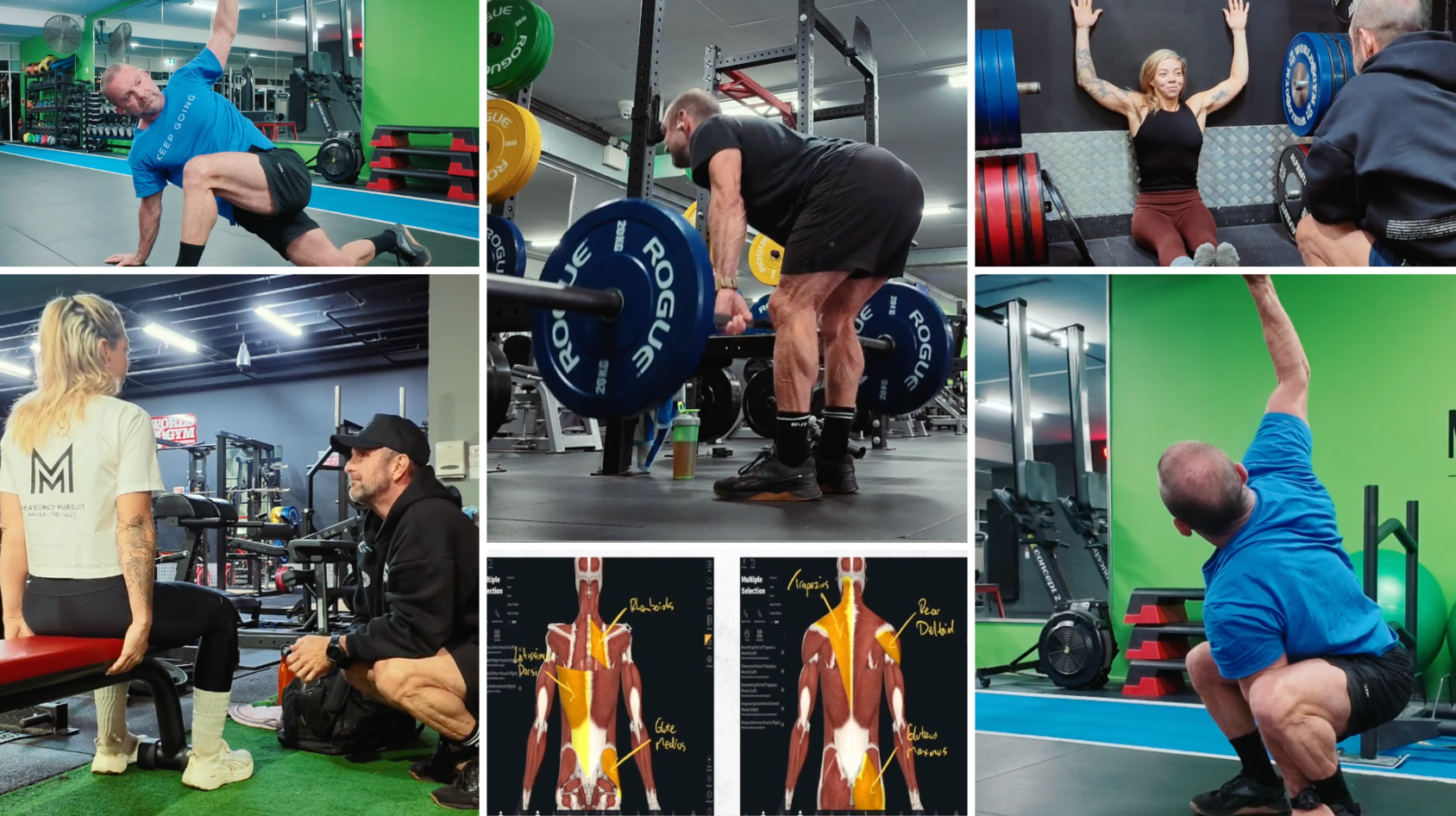
When “that doesn’t look right” isn’t specific enough
If you coach or prescribe exercise, you’ve probably had this experience:
- A client’s squat looks “okay”, but something about the trunk and pelvis feels off
- A deadlift locks out with a small hitch you can’t quite explain
- A kettlebell swing turns into a hybrid squat/front raise under fatigue
You know it isn’t optimal, but:
- You’re not fully confident in what you’re seeing in the spine and pelvis
- You’re unsure which coaching cues or regressions will create real change
- You don’t want to overload poor positions and create flare‑ups or setbacks
For exercise physiologists, personal trainers, and serious athletes, this lack of clarity slows progress and undermines confidence in your own decision-making.
This course is built to turn that uncertainty into structured, repeatable coaching decisions.
What is Included
Inside the 7‑module Coaching of Fundamental Movement Patterns course
-
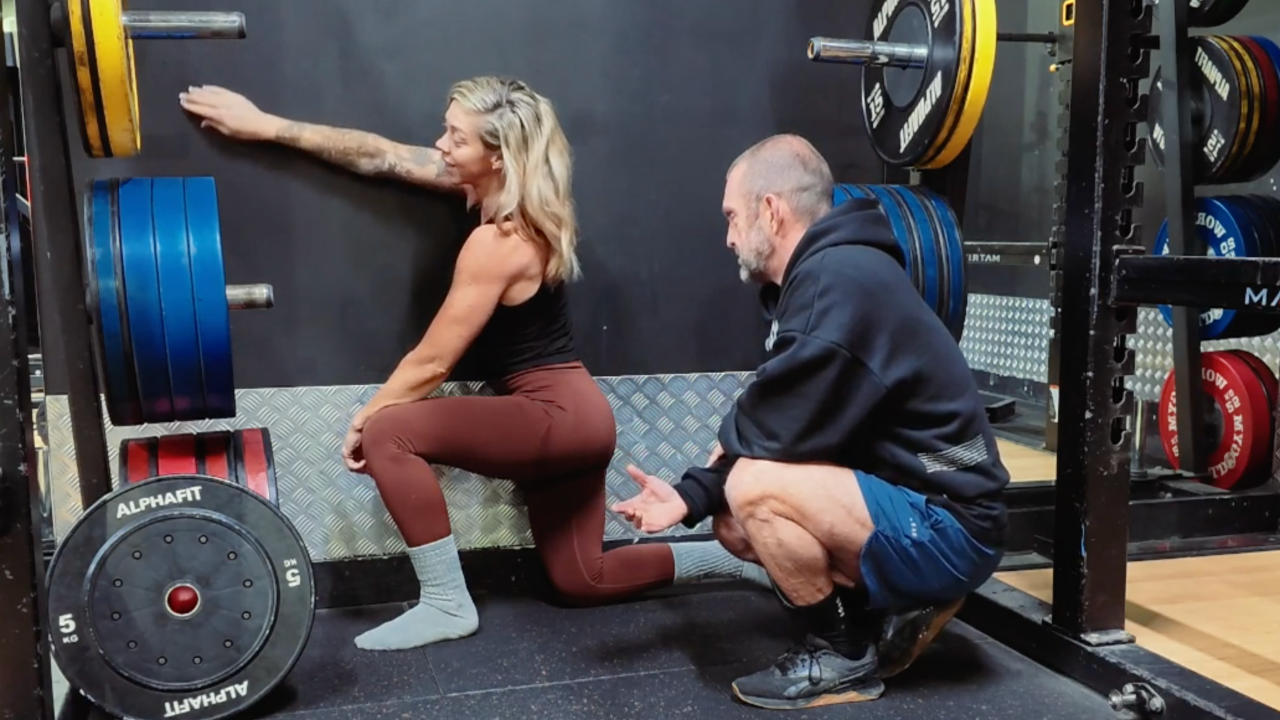
Module 1 – Technical Preparation & Movement Readiness
Establish a baseline before you load. Learn simple movement self‑assessments and preparation strategies so you know how a body is currently moving before adding intensity or complexity.Module 2 – Trunk Control & Spinal Mechanics in Movement
Understand how the trunk and spine behave under load. Recognise lumbo‑pelvic patterns that recur across lifts and how they influence force transfer, robustness, and pain risk.Module 3 – Loaded Carries & Resisted Gait
Use loaded carries and sled work as tools for trunk control and load management. Learn how to coach posture, tempo, and load so these patterns build capacity rather than just fatigue.Module 4 – Knee‑Dominant Patterns: Squat Variations
Develop a clear approach to squatting. Identify common compensations, adjust stance, depth, and tempo, and use regressions/progressions that make sense for the individual’s structure and history.Module 5 – Hip Hinge & Deadlift‑Style Patterns
Clarify the hinge. Connect spinal and pelvic position to deadlift performance and tolerance. Learn how to manipulate set‑up, range, and loading strategies to keep the hinge effective and sustainable.Module 6 – Upper Body Pulling
Dissect rowing and pulling patterns. Explore how trunk, shoulder, and grip positions interact, and how to coach pulling variations that respect both shoulder health and performance goals.Module 7 – Upper Body Pushing
Refine pressing patterns such as bench press and related variations. Focus on shoulder position, trunk mechanics, and set‑up details that support both strength development and joint longevity.
Common Questions
Q1: Will this count toward my professional development (PD)?
A: The course is designed to support ongoing learning for exercise professionals. You’ll receive a completion certificate that you can use as evidence in your PD log, in accordance with your association’s requirements.
Q2: Is the content too basic if I’m already experienced?
A: The focus is not on novel exercises, but on how you see and coach fundamental patterns. Many experienced EPs and coaches use this type of framework to sharpen their clinical reasoning and language, not to start from scratch.
Q3: I’m an athlete, not a coach. Will I still benefit?
A: Yes, if you’re serious about your own lifting, you’ll learn to understand your movement patterns, recognise when technique is drifting, and make smarter decisions about load and variation.
Q4: How long will it take to complete?
A: Most people work through the course over a few weeks, but you can move faster or slower. You can revisit any module whenever you need a refresher.